Revolutionizing Logistics with Advanced AI Technologies
- ADARSH KUMAR MALPOTRA
- Jun 4, 2025
- 3 min read
Updated: May 19
In today's fast-paced and dynamic business environment, the adoption of advanced AI technologies is revolutionizing the field of logistics. From streamlining operations to enhancing efficiency, AI is reshaping the way companies manage their supply chains and transportation networks.
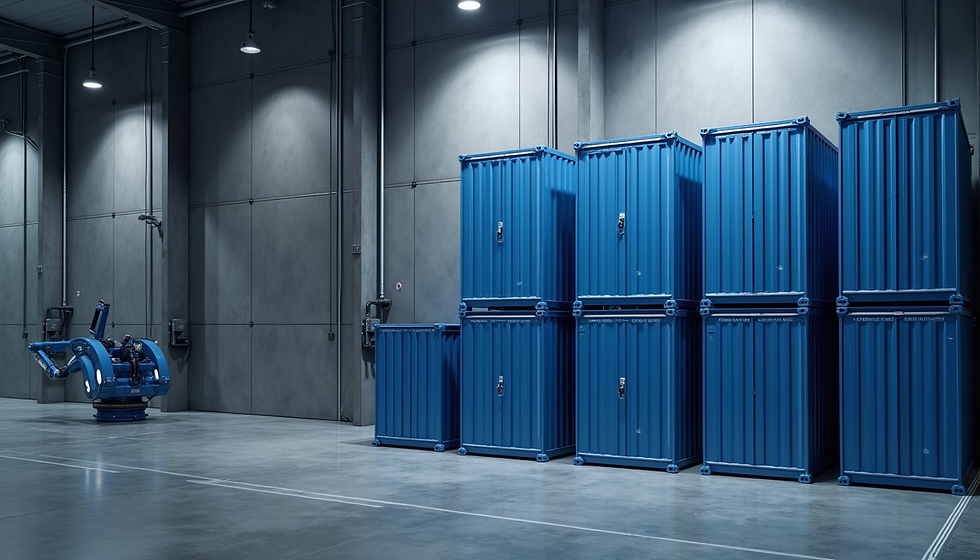
Maritime Logistics Framework
The global maritime industry underpins international trade, transporting over 80% of world cargo by volume and functioning as the backbone of modern supply chains. Its evolution from labor‑intensive break‑bulk handling to standardized containerization revolutionized global logistics. Containerization—driven by Malcolm McLean’s vision—eliminated manual sorting, reduced pilferage, accelerated port operations, and enabled the rise of intermodal transport, where standardized ISO containers seamlessly transfer between ships, trucks, and rail. These containers, equipped with twist‑lock corner castings and uniform dimensions, support specialized variants such as reefers, open‑tops, flat racks, and ISO tanks, each tailored to specific cargo requirements.
Maritime logistics is deeply intertwined with naval architecture, where vessel design is optimized for cargo type, route constraints, and fuel efficiency. Ships range from small coasters to Ultra Large Container Vessels (ULCVs) exceeding 20,000 TEU. Vessel classes such as Panamax, Suezmax, and Capesize are defined by canal and port limitations, shaping global routing patterns. Capacity metrics like Deadweight Tonnage (DWT), Gross Tonnage (GT), and Net Tonnage (NT) determine commercial viability, regulatory compliance, and port dues.
Ports serve as critical multimodal hubs where maritime and land logistics converge. Terminal efficiency depends on berth allocation, crane productivity, yard management, and equipment selection. Ship‑to‑Shore (STS) cranes, Rubber‑Tyred Gantries (RTGs), Rail‑Mounted Gantries (RMGs), and straddle carriers orchestrate container movement. Key performance indicators—such as Ship Turnaround Time, Berth Occupancy, Crane Moves per Hour, and Yard Dwell Time—directly influence supply chain velocity and cost. High dwell times create congestion, reducing throughput and increasing demurrage, detention, and storage charges.
International trade relies on a robust legal and documentary framework. Incoterms 2020 define the allocation of risk, cost, and responsibility between buyer and seller. Maritime‑specific terms—FAS, FOB, CFR, and CIF—anchor risk transfer at the point cargo is loaded onboard the vessel. The Bill of Lading (B/L) remains the central document of title, contract, and receipt, enabling cargo ownership to be transferred even while goods are at sea. Complementary documents such as the commercial invoice and packing list ensure customs compliance and financial accuracy.
Regulatory compliance is governed by the International Maritime Organization (IMO) through conventions such as SOLAS and MARPOL. The SOLAS‑mandated Verified Gross Mass (VGM) requirement ensures accurate container weights to prevent stack collapses and stability failures. MARPOL’s six annexes regulate pollution—from oil and chemicals to sewage, garbage, and air emissions. Annex VI, addressing SOx and NOx emissions, has become central to decarbonization efforts.
The industry is entering a new era of green shipping, driven by the Energy Efficiency Existing Ship Index (EEXI) and the Carbon Intensity Indicator (CII). EEXI evaluates design efficiency, while CII rates operational carbon performance annually, influencing chartering decisions and asset value. Ships with poor ratings must implement corrective action plans, accelerating the shift toward cleaner propulsion, optimized routing, and energy‑saving technologies.
Looking ahead to 2026 and beyond, maritime logistics is being reshaped by AI‑driven optimization, digital twins, and blockchain‑based documentation, enabling real‑time visibility, predictive resilience, and fraud‑proof trade flows. Geopolitical disruptions—such as the Red Sea crisis and Panama Canal droughts—underscore the shift from “just‑in‑time” to resilience‑centric supply chains. The convergence of digitalization, sustainability, and global risk management defines the next frontier of maritime logistics.
One company at the forefront of this innovation is AI in Finance and Logistics, bringing over a decade of experience in land logistics and offshore logistics, coupled with expertise in the technical and finance domains. This unique blend of industry knowledge positions the company as a leader in leveraging AI to optimize logistics processes. AI technologies offer a wide range of benefits for logistics operations. One key advantage is predictive analytics, which enables companies to forecast demand, optimize inventory levels, and improve routing and scheduling decisions. By analyzing historical data and real-time information, AI algorithms can identify patterns and make data-driven recommendations to enhance decision-making. Another area where AI is revolutionizing logistics is in the realm of warehouse automation. Through the use of robotics and AI-powered systems, companies can automate repetitive tasks, optimize storage space, and increase order fulfillment speed. This not only leads to cost savings but also improves accuracy and customer satisfaction. Furthermore, AI is enhancing supply chain visibility and transparency. By integrating IoT devices and sensors, companies can track the status and location of goods in real time, enabling proactive management of potential disruptions and bottlenecks. This level of visibility is crucial for meeting customer expectations and maintaining a competitive edge in the market. In conclusion, the adoption of advanced AI technologies is transforming the logistics industry by enabling companies to optimize processes, increase efficiency, and improve overall performance. With AI in Finance and Logistics leading the way with its extensive experience and expertise, businesses can stay ahead of the curve and unlock new opportunities for growth and success in the digital age.


Comments